
Why Your Skin Suddenly Feels “Off”
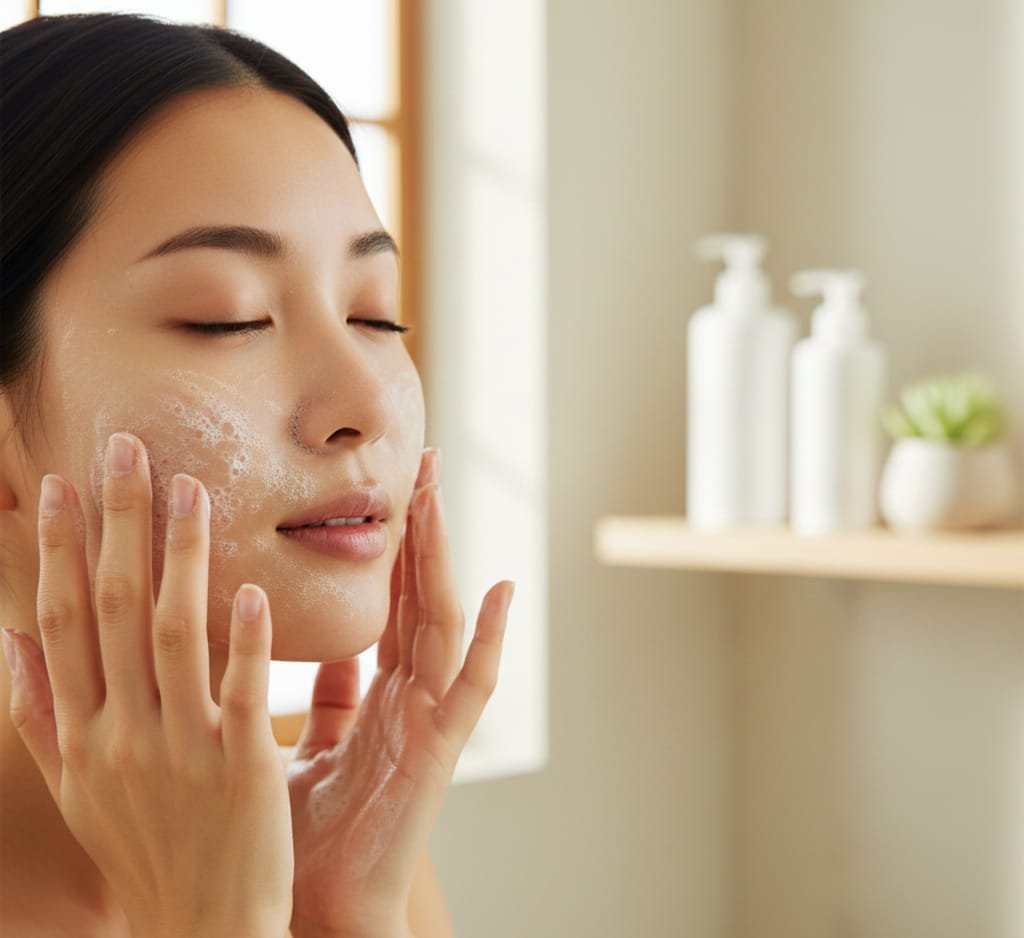
Have you ever noticed your skin burning after applying products that once worked perfectly? Or feeling tight, dry, irritated—even though you’re moisturizing regularly?
This isn’t random.
In most cases, it’s a sign of skin barrier damage.
Your skin barrier is your skin’s first line of defense. When it’s healthy, your skin looks calm, smooth, and resilient. When it’s damaged, almost everything feels wrong — breakouts, redness, sensitivity, and dehydration all show up at once.
Let’s break this down properly, the way a dermatologist would.
What Is the Skin Barrier? (Simply Explained)

The skin barrier, also called the moisture barrier or epidermal barrier, is the outermost layer of your skin.
Think of it like a brick wall:
- Skin cells = bricks
- Lipids (ceramides, cholesterol, fatty acids) = cement
This barrier:
✔ Locks moisture inside
✔ Keeps bacteria and pollutants out
✔ Protects against irritation and inflammation
When this barrier weakens, your skin loses water rapidly — a process known as transepidermal water loss (TEWL).
Signs of a Damaged Skin Barrier
- Lipids (ceramides, cholesterol, fatty acids) = cement
This barrier:
✔ Locks moisture inside
✔ Keeps bacteria and pollutants out
✔ Protects against irritation and inflammation
When this barrier weakens, your skin loses water rapidly — a process known as transepidermal water loss (TEWL).
Signs of a Damaged Skin Barrier
If you’re experiencing two or more of these, your barrier may be compromised:
- Skin feels tight after washing
- Burning or stinging when applying products
- Redness or inflammation without acne
- Sudden sensitivity to skincare
- Dry skin despite using moisturizer
- Acne caused by damaged skin barrier
👉 Many people mistake this for “bad skin” — but it’s actually overworked skin.
What Causes Skin Barrier Damage?
kin barrier damage doesn’t happen overnight. It’s usually caused by repeated stress.
1. Over-Exfoliation
Using acids, scrubs, or retinoids too often strips away protective lipids.
2. Harsh Cleansers
Foaming or high-pH cleansers disrupt the natural skin microbiome.
3. Too Many Active Ingredients
Layering vitamin C, retinol, acids, and benzoyl peroxide without recovery days weakens skin resilience.
4. Skipping Sunscreen
UV exposure breaks down barrier lipids and collagen.
5. Environmental Stress
Pollution, dry air, and extreme weather accelerate barrier damage.
How to Repair Skin Barrier Damage (Dermatologist-Approved)
The key is repair first, treat later.
Step 1: Simplify Your Routine
Pause exfoliants, retinoids, and strong actives.
Stick to:
- Gentle cleanser
- Barrier-repair moisturizer
- Sunscreen (daytime)
Step 2: Use Barrier-Repair Ingredients
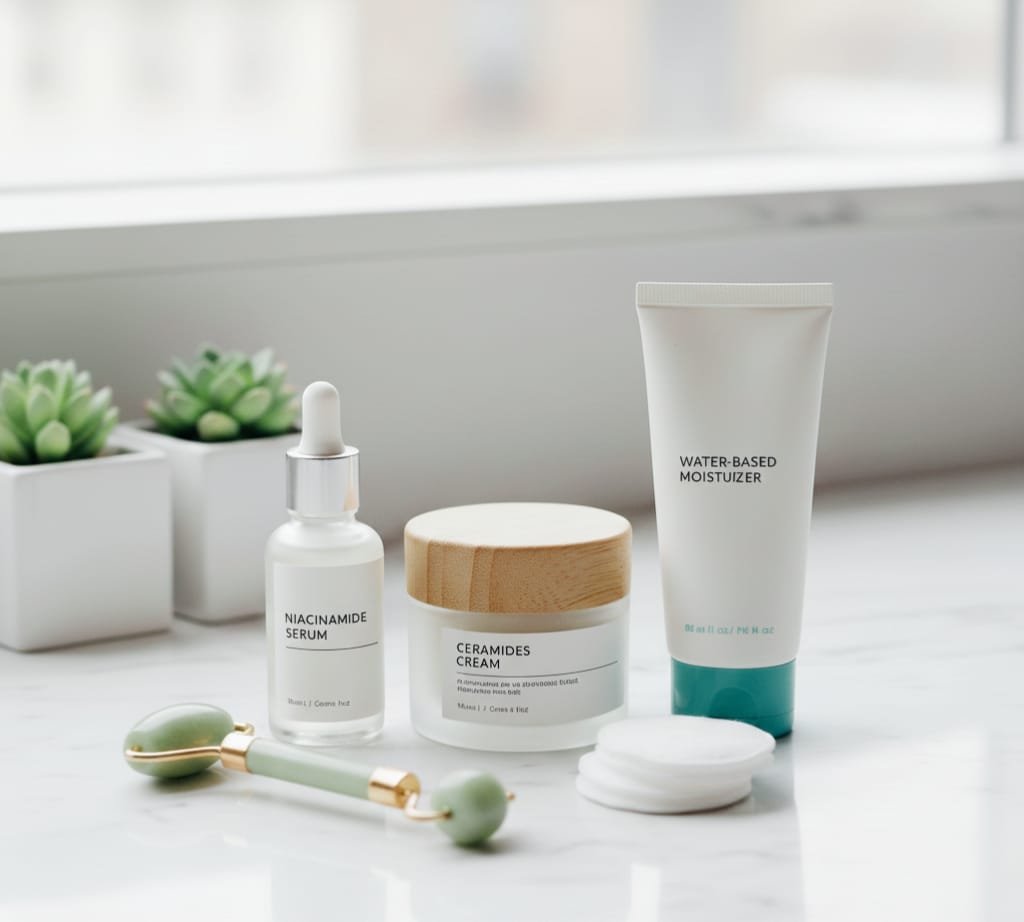
Look for these clinically trusted ingredients:
✔ Ceramides
Rebuild the skin’s lipid structure.
✔ Niacinamide (Low %)
Calms inflammation and strengthens the barrier.
✔ Hyaluronic Acid
Hydrates deeply without irritation.
✔ Panthenol (Vitamin B5)
Supports healing and reduces redness.
✔ Glycerin
Improves long-term moisture retention.
Skin Barrier Repair Routine (Morning & Night)
Morning Routine
- Gentle, non-foaming cleanser
- Hydrating serum (hyaluronic acid)
- Barrier-repair moisturizer
- Broad-spectrum sunscreen
Night Routine
- Mild cleanser
- Soothing serum (niacinamide or panthenol)
- Rich moisturizer to seal hydration
How long does skin barrier take to heal?
Most skin barriers recover within 2–4 weeks with proper care.
Can Acne Be Caused by a Damaged Skin Barrier?
Yes — very often.
When the barrier is weak:
- Bacteria penetrate easily
- Skin overproduces oil to compensate
- Inflammation increases
This leads to persistent acne that doesn’t respond to treatment.
👉 That’s why calming the skin is often more effective than aggressive acne treatments.https://themishkin.com/best-skincare-routine-for-acne-prone-skin-clear-skin-starts-with-care/
Mistakes to Avoid While Healing Your Skin Barrier
❌ Scrubbing your face
❌ Using alcohol-based toners
❌ Changing products too frequently
❌ Expecting overnight results
Healing requires consistency, not intensity.
Final Thoughts: Healthy Skin Starts With a Strong Barrier
Great skin isn’t about expensive products or complex routines.
It’s about protecting what your skin already has.
Once your skin barrier is healthy:
✔ Acne reduces
✔ Sensitivity fades
✔ Products work better
✔ Skin looks naturally radiant
If your skincare has stopped working, don’t add more — repair first.
Your skin will thank you.